In the News
Smart Startup Accounting Software: Puzzle Raises $15M | Sep 2026
Today we are excited to share Puzzle’s first chapter: smart accounting software together with a real-time financial data platform in a single solution.

2.15.23

Today we are excited to share Puzzle’s first chapter: smart accounting software together with a real-time financial data platform in a single solution.
Today we are excited to share Puzzle’s first chapter: smart accounting software together with a real-time financial data platform in a single solution. This combination brings capabilities beyond legacy accounting software, making it easy for founders (and their finance teams) to build a scalable foundation for fundraising, taxes and improving business health - all in one place, in real-time, and in-depth.
We think right now is a unique time to build the next generational accounting software. We have seen the impressive wave of finance innovation led by teams at Stripe, Brex, Ramp, Mercury, Rippling, Gusto, and Plaid, who built modern APIs that enable industry-defining automation and differentiation. Puzzle is the modern complement to these solutions, and what one founder described to us as their “missing piece of a modern finance stack.”
When every minute is an opportunity cost, speed and accuracy are a competitive advantage. Puzzle believes accounting and finance are the underrated superpowers that set apart the next great businesses, but leaders are held back by legacy software that lacks the speed, collaboration, and intelligence needed for today’s fast-changing economy.
It’s no longer enough for founders to build great products; they need to build great businesses too. A startup needs a solution for taxes and financial reporting, but in tighter funding environments founders need to be more on top of their balance sheet and performance metrics than ever before.
A startup can choose a modern stack for almost every part of their business.....
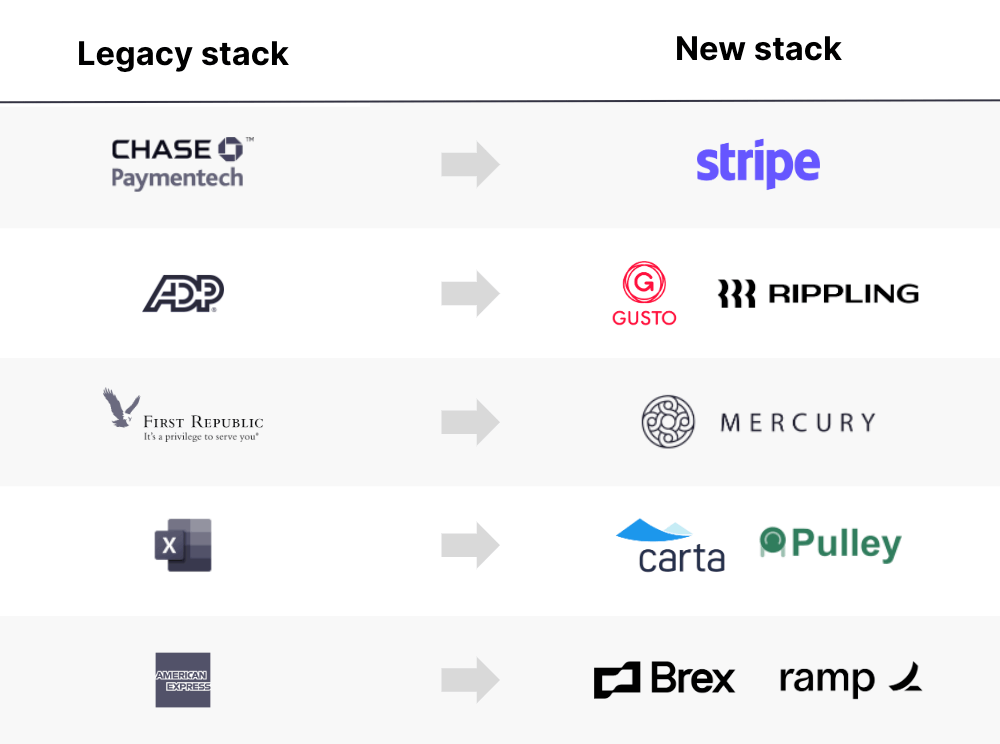
.... except their core accounting solution is still 30+ years old.
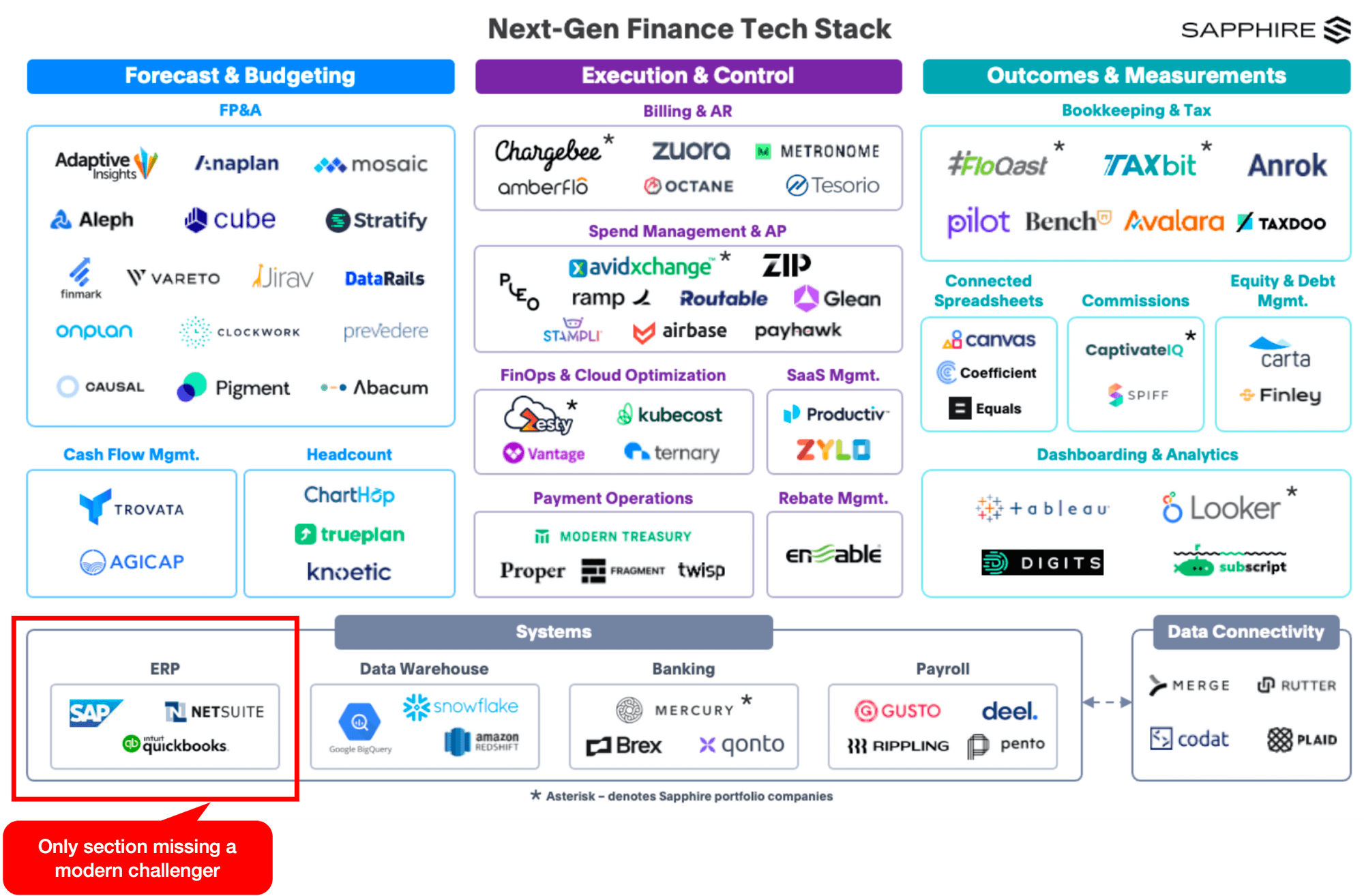
Source: Sapphire Ventures: Rise of the Next-Gen CFO: The Evolution of Finance’s Role and Tech Stack
After building in stealth for 3 years with hundreds of startups as alpha testers, we started seeing founders sharing Puzzle with other founders, with their investors, and with their accountants. We knew we couldn’t keep it a secret much longer…
“Puzzle is the most impressive piece of software I have seen in a while”
“I can’t imagine building my startup without the peace of mind from using Puzzle. It is the most intuitive accounting software ever.”
“Puzzle is amazing. As a first-time founder, I wanted to worry less about the back-office so I could focus on building my business. Puzzle delivers best-in-class software and support experience. I have already recommended Puzzle to other founders and will continue to do so.”
By combining smart accounting software and a real-time financial data platform in a single solution, Puzzle can enable a new set of capabilities for startups immediately:
| Legacy Accounting Software | Puzzle |
|---|---|
| Static, summary numbers only | Real-time, drillable financials — see the "why" behind every number |
| Data delivered weeks after month-end | Continuous updates; burn, runway, and ARR available daily |
| Manual categorization and data entry | Learning system auto-categorizes transactions; improves over time |
| Cash or accrual — not both | Verifiably accurate cash and accrual books simultaneously |
| No startup-specific metrics | True cash, burn rate, runway, ARR, and spend analysis built in |
| Built for the past; no integration with modern fintech | Native integrations with Stripe, Mercury, Ramp, Brex, Gusto, and more |
Accounting software was none of this. It offered only a specific set of static, summary numbers, often delivered weeks after a month ends. This leads most founders to consider accounting a dead end for data, rather than a starting point of useful financial analysis. This limitation of capabilities is not a failure of accounting, but a failure of accounting software.
The bet we made at founding — that accounting software needed to be rebuilt from the ground up, not patched — has become the defining conversation in finance. By 2026, AI-native accounting is a recognized category. The AI in accounting market is projected to grow at a 42.9% CAGR through 2029 — nearly double the pace of the broader accounting software market. Auditors at major firms now analyze full transaction populations instead of sampling. Automated close cycles that once took two weeks are running in days. A new cohort of AI-first accounting startups has emerged from Y Combinator alone, each trying to solve a slice of the problem Puzzle addresses end-to-end.
What this means for founders: the bar for "good enough" accounting has moved. Investors expect real-time burn and runway visibility. Auditors expect clean, traceable records. And the tools to deliver all of that — without a full finance team — finally exist. That's the world Puzzle was built for.
We are proud to have raised $50M in total funding to date, starting with a $15M Series A and a subsequent $30M raise, led by Hemant Taneja from General Catalyst (Stripe, Gusto, Ramp), FOG Ventures (an investing network of 700 venture-backed CFOs and operators), Ross Fubini from XYZ, Wes Chan from Felicis, Ash Rust from Sterling Road, Brian Dixon from Kapor Capital, and angels from Stripe, SVB, Brex, Mercury, Carta, AngelList, Square, Gusto, Plaid, LTSE, Airbase, renowned angel investors such as Gokul Rajaram, Lean Startup author Eric Reis, Ayo Omojola, founder networks Village Global, OnDeck, and an alumni syndicate from Y-Combinator, and accounting and auditing experts from KPMG, EY, Deloitte, PwC, Trivium Accounting and Tax, Integrated CPA as well as many other founders, operators, and early supporters. We also have an incredible advisory board of accountants, CFOs, operators, and founders overseeing the product roadmap and making sure we are building for scale.
We have an amazing team across accounting, taxes, audit, venture capital, finance, engineering (including multiple accountant engineers), data, machine learning, design that have built some of the companies you know well, and many you have likely never heard of. We are here to make you successful.


Yes. Puzzle is built to scale from a single-entity pre-seed startup to a multi-entity company — all from one dashboard, without the cost or complexity of an ERP. You can track separate books per entity while viewing consolidated financials in real time. That means no duplicate data entry, no switching between logins, and no six-figure implementation project. It's the visibility of enterprise-grade software, sized for your actual stage.
Puzzle's AI handles the heavy lifting — categorization, reconciliation, anomaly detection, and close-checklist execution — but keeps a human in the loop before anything posts to the books. Autonomous-everything tools move fast, but by the time you see the output, the decisions are already made. Puzzle inverts that model: the AI does the work, you approve before it touches your ledger. For a startup where a misposted journal entry can distort your burn rate or trip up an audit, that review step isn't a limitation — it's the point.
Puzzle's learning system auto-categorizes transactions by connecting directly to your bank feeds and fintech integrations (Stripe, Mercury, Ramp, Brex, Gusto, and more) — no OCR, no manual import. It gets more accurate over time, applying rules learned from your chart of accounts and prior categorization decisions. The result: the categorization work that used to take hours each week runs automatically in the background, and exceptions surface for your review rather than burying you in a full transaction list.
Puzzle integrates natively with Gusto and Rippling. When payroll runs, Puzzle pulls in the payroll data and maps it to the correct GL accounts automatically — wages, employer taxes, benefits, and employer contributions each land in the right place without manual journal entries. For a deeper look at how this works, see Gusto payroll automation in detail. You review the mapped entry, approve it, and it posts. No copy-pasting from a payroll summary PDF, no risk of mis-mapping a benefits line to the wrong expense account.
For most 10-person startups, Puzzle handles the bookkeeping work that previously required a part-time bookkeeper — categorization, reconciliation, financial statements, and startup metrics like burn and runway — automatically and in real time. That said, "replace" is the wrong frame. Puzzle removes the mechanical work so that when you do bring in an accountant or CFO (and you will, before your Series A), they spend their time on strategy and review, not data entry. The accuracy bar is high: Puzzle auto-categorizes up to 98% of transactions, and every number is traceable back to the source transaction. What it doesn't replace is judgment on complex revenue recognition, multi-jurisdiction taxes, or audit prep — that's where your accounting partner earns their fee.
Day one. The most expensive accounting mistakes happen at the beginning — wrong entity setup, co-mingled personal and business expenses, missing early equity transactions — and they compound silently until a fundraise or tax filing surfaces them. Accounting gaps during fundraising due diligence routinely force founders to spend weeks recreating records and answering preventable questions about cash runway — time that should go toward closing the round. Puzzle gives pre-revenue founders clean, auditable books from inception: categorized transactions, correct equity entries, and real-time visibility into burn even when the only transactions are founder contributions and AWS bills. The cost of cleaning up a messy ledger before a Series A is almost always higher than the cost of getting it right at incorporation. Starting on Puzzle means you never have to do that cleanup.
Puzzle connects natively to Stripe and separates gross revenue, processing fees, and net payouts automatically — no manual journal entries, no spreadsheet formulas to maintain. Fees land in the correct expense account; revenue maps to your chart of accounts by product or plan if you've set up Stripe's metadata. For a full comparison of accounting software for SaaS startups using Stripe and Mercury, see our dedicated guide. Puzzle auto-categorizes up to 98% of transactions, and every number traces back to the source transaction so you can verify it. Exceptions surface for your review rather than silently hitting the wrong account.
Puzzle's direct integrations are currently focused on US-based bank and fintech accounts (including Mercury, Brex, Ramp, SVB, and others). For international accounts, you can import transactions via CSV. Puzzle is actively expanding its integration coverage — if your international bank is a priority, reach out so the team can track demand and prioritize accordingly.
Puzzle's AI learns from your chart of accounts and categorization history to apply consistent rules across every transaction — no manual setup required for each new transaction type. It handles auto-categorization, reconciliation matching, anomaly flagging, and close-checklist execution on a schedule. You can also interact with it directly to split transactions, reclassify entries, identify fixed assets, or pull a quick P&L — the AI does the work, you approve before anything posts to the ledger. The system gets more accurate over time: rules you apply once train the model for every similar transaction going forward.
Yes. Puzzle connects to Stripe, and through it can track revenue by product, plan, or customer — including gross sales, refunds, and net after processing fees. Profit margin visibility follows directly: with revenue and expenses both landing in the correct accounts automatically, your P&L reflects real-time margin without a manual month-end assembly. For e-commerce businesses selling across multiple channels, you can consolidate feeds and see a single margin picture across the business.
Yes on all three. You can ask Puzzle's AI to split a transaction across multiple GL accounts (useful for mixed-purpose purchases or prepaid expenses), flag a transaction as a fixed asset and route it to the correct asset account, or generate a P&L for any time range instantly. These aren't future roadmap items — they're actions you can take today from the Puzzle interface, with the AI doing the mechanical work and the result ready for your review before it posts.
Puzzle tracks sales transactions and the associated jurisdiction data across your connected revenue sources. For startups with nexus in multiple states, Puzzle's integrations surface the transaction-level data you need for sales tax filing — amounts by jurisdiction, product type, and date range — without manual re-entry. Rate table maintenance and jurisdiction code matching happen in the background. For complex multi-state compliance, Puzzle works alongside dedicated sales tax tools (like Avalara or TaxJar) so the transaction data flows cleanly into whichever compliance layer you use.
Starting with companies as their first accounting software, we want the next generation of ambitious founders to build their businesses with us, on Puzzle. The world needs their ingenuity, and Puzzle exists to set them up for lasting success.