Startup Accounting
Puzzle vs Campfire: Which is Better in April 2026?
Compare Puzzle vs Campfire for startups in April 2026. See which accounting software fits your stage with setup time, AI features, and partner support compared.

4.14.26

Compare Puzzle vs Campfire for startups in April 2026. See which accounting software fits your stage with setup time, AI features, and partner support compared.
If you're comparing Campfire vs Puzzle, you're probably wondering whether you need ERP-level accounting yet. The real cost of tools like Campfire shows up during onboarding, when you're looking at days to weeks of configuration work across multi-entity structures and revenue contracts. For startups with one to 25 employees and no dedicated controller, that's time you don't have. What you need is software that gives you real-time burn rate and runway insights in your first week, not your first month.
TLDR:
Campfire is an accounting solution built for startups and mid-size tech companies. It offers multi-entity support, department-level financial reporting like P&L by department, and a general ledger with close management tools. The product positions itself as an AI-first ERP, with revenue automation baked in.
The typical Campfire customer is migrating up from QuickBooks, Xero, Sage Intacct, or NetSuite. That migration context matters. Companies moving off those tools usually have growing complexity: multiple entities, more headcount, and finance teams that need more structure.
That's a real category of company. But ERP territory, by definition, means more setup, more configuration, and more overhead. If you're an early-stage startup or a lean accounting firm, that tradeoff deserves a closer look before you commit.
Puzzle is AI-native accounting software built for founders who need real financial visibility without hiring a full-time accountant, and for accounting firms that want to scale without drowning in manual work. AI isn't a feature that was added later. It's how the product works at its core.
Where Campfire leans into ERP complexity, Puzzle leans into automation and speed. Connect your financial stack in minutes, and Puzzle starts categorizing transactions, matching accounts, and surfacing insights immediately. Up to 98% of transaction categorization happens automatically. Bank reconciliations that used to take two hours now take five minutes.
Puzzle is purpose-built for pre-seed to Series B startups and the accounting firms that serve them. If you're running a SaaS company on Stripe, Mercury, or Ramp, Puzzle was designed with your stack in mind.
Campfire and Puzzle are solving problems at different stages of the startup journey.
At seed stage, Campfire grew to around 100 customers, including one global customer on track to hit $250 million ARR. One team cut their close from 15 days down to three after migrating from NetSuite. Those numbers tell you exactly who Campfire serves: companies with dedicated finance teams, controllers, and CFOs who need ERP-tier tooling. Multi-entity structures, complex international operations, and sophisticated revenue recognition are where Campfire earns its place.
If you're pre-seed through Series B with one to 25 employees, ERP overhead will slow you down. With investors now recommend 24-36 months of runway versus the traditional 18-24 months, real-time financial visibility has become even more critical. Puzzle gives founders that visibility without requiring them to become accountants or hire a controller.
For accounting firms serving that early-stage cohort, Puzzle's workflows and partner-only model are designed around exactly that relationship.
Setup time is often where the real cost of a tool reveals itself.
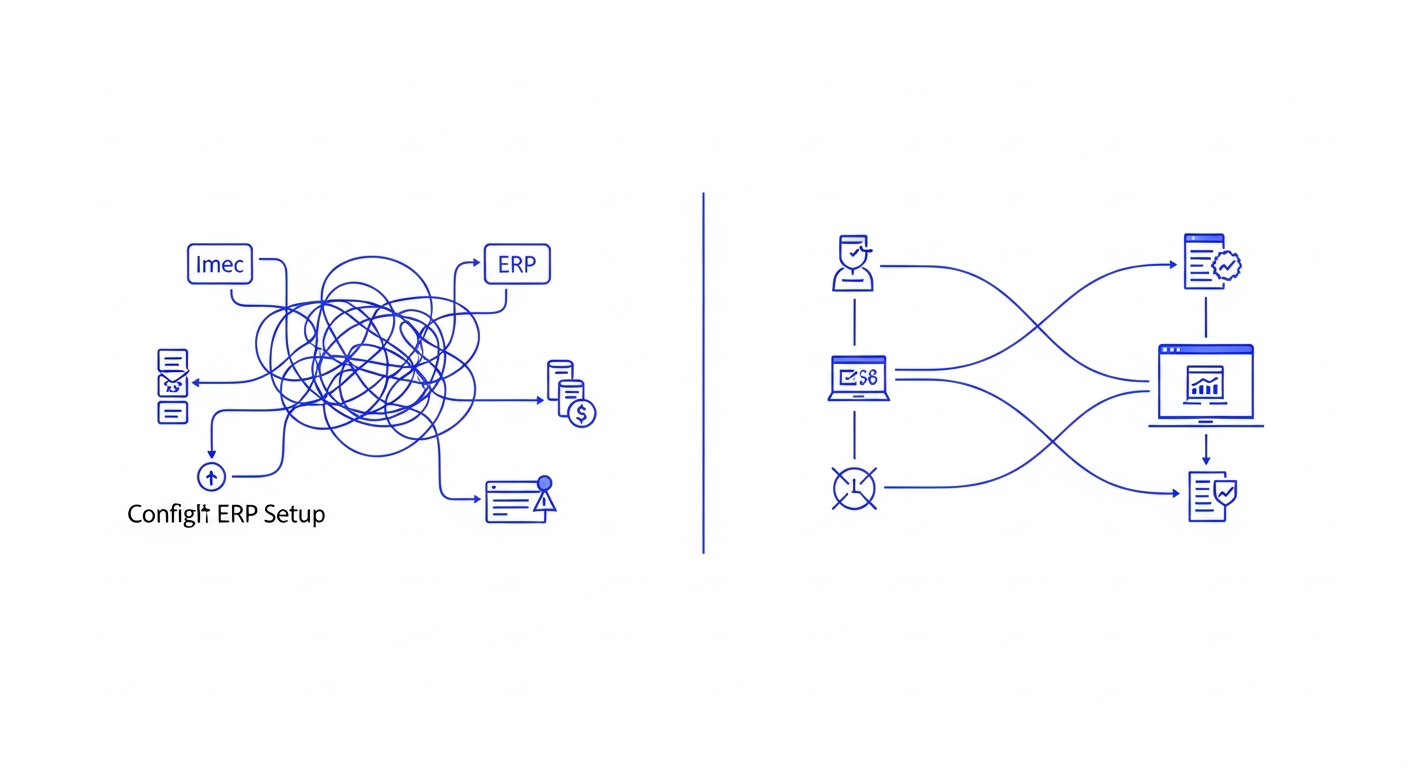
Campfire's onboarding reflects its ERP ambitions. Migrating from Sage Intacct or NetSuite involves days to weeks of implementation, with configuration work across multi-entity structures, complex revenue contracts, and API customization. Campfire does provide in-house accountant support during this process, which helps, but you still need dedicated finance resources to manage it. For companies replacing legacy ERPs with genuinely complex data, that investment is defensible. For everyone else, it's a steep entry fee.
Puzzle takes the opposite approach. Native integrations with Stripe, Mercury, Brex, Ramp, Gusto, and Deel connect in minutes, not days. Free migrations from QuickBooks, Xero, or spreadsheets come with 100% data accuracy, and most bookkeepers learn the system in about an hour. Founders can see real-time insights immediately after connecting accounts.
The difference in time-to-value is real. With Puzzle, you're getting insights within your first week. With Campfire, you may still be in configuration mode.
| Feature | Campfire | Puzzle |
|---|---|---|
| Ideal Customer | Companies migrating from NetSuite or Sage Intacct with dedicated finance teams, controllers, and CFOs managing multi-entity structures | Pre-seed to Series B startups with 1-25 employees and accounting firms serving early-stage companies |
| Setup Time | Days to weeks of implementation with configuration work across multi-entity structures, complex revenue contracts, and API customization | Connect financial stack in minutes with native integrations; most bookkeepers learn the system in about an hour |
| AI Approach | L.A.M. (Large Accounting Model) trained exclusively on accounting data, achieving 95% accuracy on reconciliations and variance detection; Ember AI handles multi-currency transactions and flux analysis | AI-native from the ground up with up to 98% automated transaction categorization; AI learns from corrections and includes AI Accuracy Reviews to catch errors proactively |
| Native Integrations | API customization available for complex enterprise integrations and legacy ERP migrations | Native integrations with Stripe, Mercury, Brex, Ramp, Gusto, and Deel that connect in minutes |
| Partner Model | Works with advisory firms and values accountant feedback; sells directly to companies with internal finance teams | Partner-only model exclusively through accounting firms with guaranteed no competition for clients; no bookkeeping services ever |
| Key Capabilities | Multi-entity support, department-level P&L reporting, close management tools, and revenue automation for complex recognition schedules | Real-time burn rate and runway tracking, dual-basis accounting (cash and accrual simultaneously), automated revenue recognition, and metrics updated daily |
| Best For | Later-stage companies with multiple entities, global operations, and sophisticated revenue recognition needs requiring ERP-tier tooling | Founders who need financial visibility without accounting expertise and firms that want to scale without proportional cost increases |
Both tools use AI heavily. Where they differ is in who that AI is actually built for.

Campfire's L.A.M. (Large Accounting Model) is trained exclusively on accounting data, hitting 95% accuracy on reconciliations and variance detection. Ember AI functions like an on-call finance teammate, handling multi-currency transactions, FX gains and losses, and flux analysis across entities. These are impressive capabilities, but ones that assume you have a finance team sophisticated enough to interpret them.
Puzzle's AI starts working the moment you connect your accounts. Up to 98% of transactions get categorized automatically, the AI learns from your corrections, and AI Accuracy Reviews catch errors before they reach clients or investors. No configuration sprint required.
The month-end close cuts by up to 50%, and human-in-the-loop workflows mean accountants stay in control throughout. For early-stage teams without a dedicated controller, that accessibility gap matters more than the feature list.
Campfire works with advisory firms and values accountant feedback. Its go-to-market includes direct sales to companies with internal finance teams, which means accounting firms are not the primary relationship.
Puzzle is built differently. It operates exclusively through accounting partners and guarantees it will never compete with your firm for clients. No bookkeeping services, no direct-to-business sales.
Here is what that looks like in practice:
Firms using Puzzle report margins of 60-80% compared to the industry average of 20-25%, adding clients without proportional cost increases. When Puzzle grows, your firm grows with it.
Campfire earns its place for companies with multi-entity structures, global operations, and a dedicated finance team ready to configure ERP-tier software. If that's you, it's worth serious consideration.
For everyone else, Puzzle is the right call.
Pre-seed through Series B, single entity, no controller yet? With 38% of startups fail from cash shortages and median fundraising cycles now stretching to 23 months in 2026, real-time financial visibility isn't optional anymore. Puzzle gives you real-time burn rate, runway, and cash position without requiring you to become an accountant or spend weeks in onboarding.
Accounting firms get automation that supports 60-80% margins and a partner who will never undercut them with competing services.
Campfire is built for where you're going. Puzzle is built for where you are right now, and for getting there faster. When multi-entity consolidation and enterprise-grade revenue contracts eventually become your reality, that's the right moment to consider ERP solutions. Until then, staying lean with purpose-built software at your exact stage wins every time.
The Campfire vs Puzzle decision isn't about which product is better in absolute terms. It's about which one fits where you are right now. If you don't have a dedicated finance team yet, ERP-tier configuration overhead creates friction you don't need. We designed Puzzle to work immediately, giving you real-time financial data the day you connect your accounts. Book a demo to see how fast you can get up and running.
The decision comes down to your stage and team structure. If you're pre-seed through Series B with under 25 employees and no dedicated controller, Puzzle is built for you, providing real-time burn rate, runway, and cash position without weeks of onboarding. If you're later-stage with multiple entities, a finance team, and need ERP-tier consolidation, Campfire makes more sense.
Campfire requires days to weeks of implementation with dedicated finance resources to configure multi-entity structures and complex revenue contracts. Puzzle connects your financial stack in minutes through native integrations with Stripe, Mercury, and Ramp, with most bookkeepers learning the system in about an hour and founders seeing real-time insights within the first week.
Puzzle serves two core groups: pre-seed to Series B founders who need financial visibility without hiring a full-time accountant, and accounting firms that serve those early-stage startups. If you're running a lean team on a modern stack and need real-time insights without ERP overhead, Puzzle was designed with your exact needs in mind.
Campfire is designed for companies with dedicated finance teams, controllers, and CFOs who can manage ERP-tier configuration and multi-entity structures. As a founder without accounting expertise, you'll likely find the setup and ongoing management challenging without hiring finance resources first.
Puzzle operates exclusively through accounting partners and guarantees it will never compete with your firm for clients, no bookkeeping services, no direct-to-business sales, ever. You get free client migrations, white-glove support, revenue share programs, and real input into the product roadmap, while Campfire sells directly to companies with internal finance teams, making them a vendor instead of a true partner.